


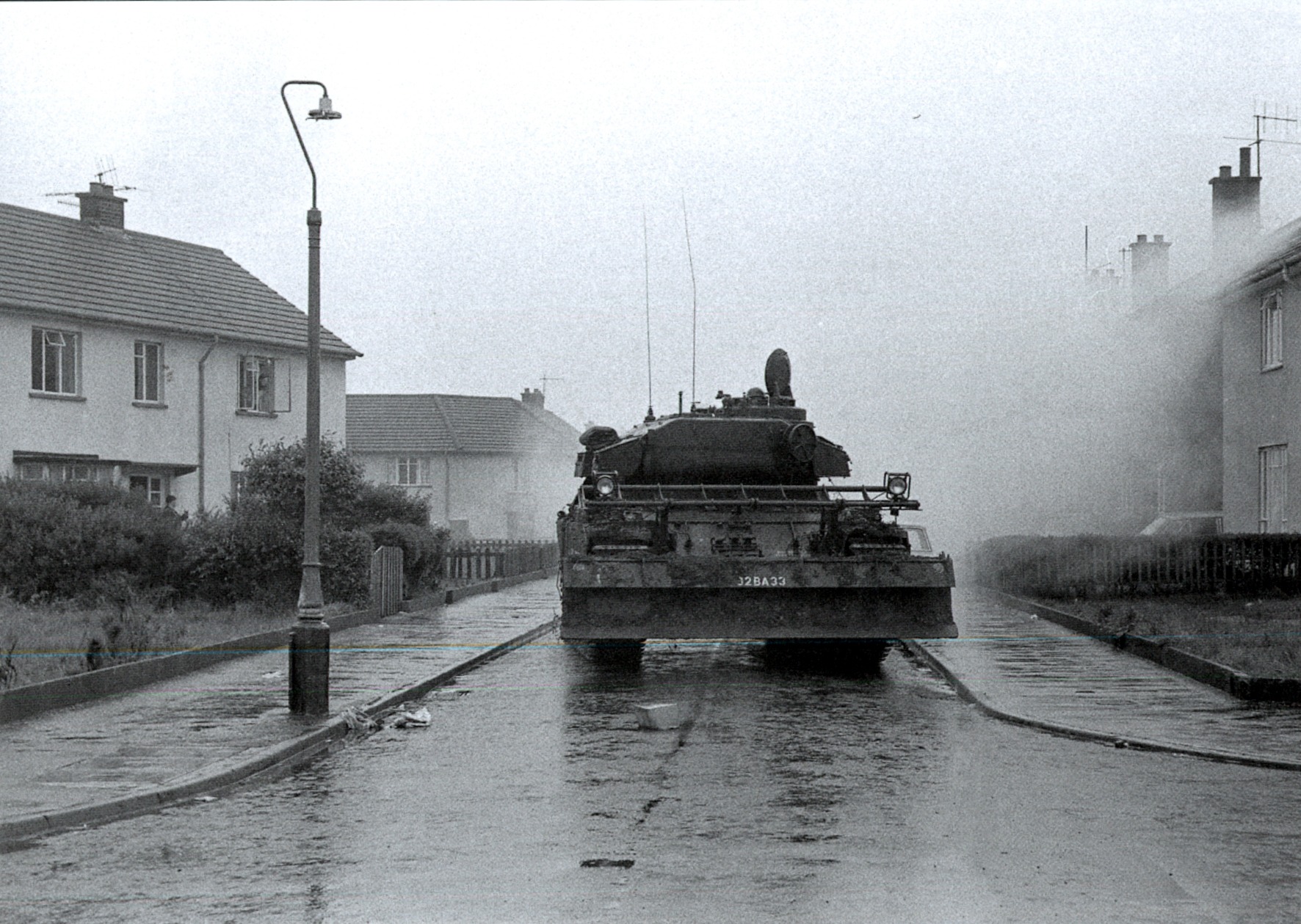
Free Derry as a physical entity ended with Operation Motorman, and this area suffered inordinately in the decades of armed conflict that followed.
Article Archives
Motorman
Bloody Sunday failed in its objective to terrorise the no-go area. Stormont fell in March and direct-rule from London was re-instated.
Bloody Sunday

British and unionist politicians fumed at the existence of Free Derry. But internment had stiffened the community’s resolve. An anti-internment march was planned for 30 January 1972.
Internment

As violence spiralled, the British Government, pressed by unionist leaders at Stormont, introduced internment (imprisonment without trial) in August 1971. The measure had been used against republicans in every decade since the foundation of the state.
Towards War

Disagreement on how to relate to a dramatically changed situation had led to the Republican Movement splitting in December 1969 into the ‘Officials’ (OIRA) and ‘Provisionals’ (PIRA). Both groups were making ready for an armed campaign.
Battle of the Bogside

On 12 August, thousands of Apprentice Boys prepared to march through a Derry seething with anxiety and discontent. As the march passed the Bogside, it was greeted by jeering and stone throwing. The police, backed by loyalists, tried to force the protesters back.
Free Derry

In early January 1969, as police attacked the Bogside, the slogan ‘You Are Now Entering Free Derry’ was first written on the gable wall. It was inspired by the sit-in protests in Berkeley University, California.
Duke Street

A march was planned for Derry in October 1968. Despite the march being banned by the Unionist government, the protestors went ahead.
Civil Rights
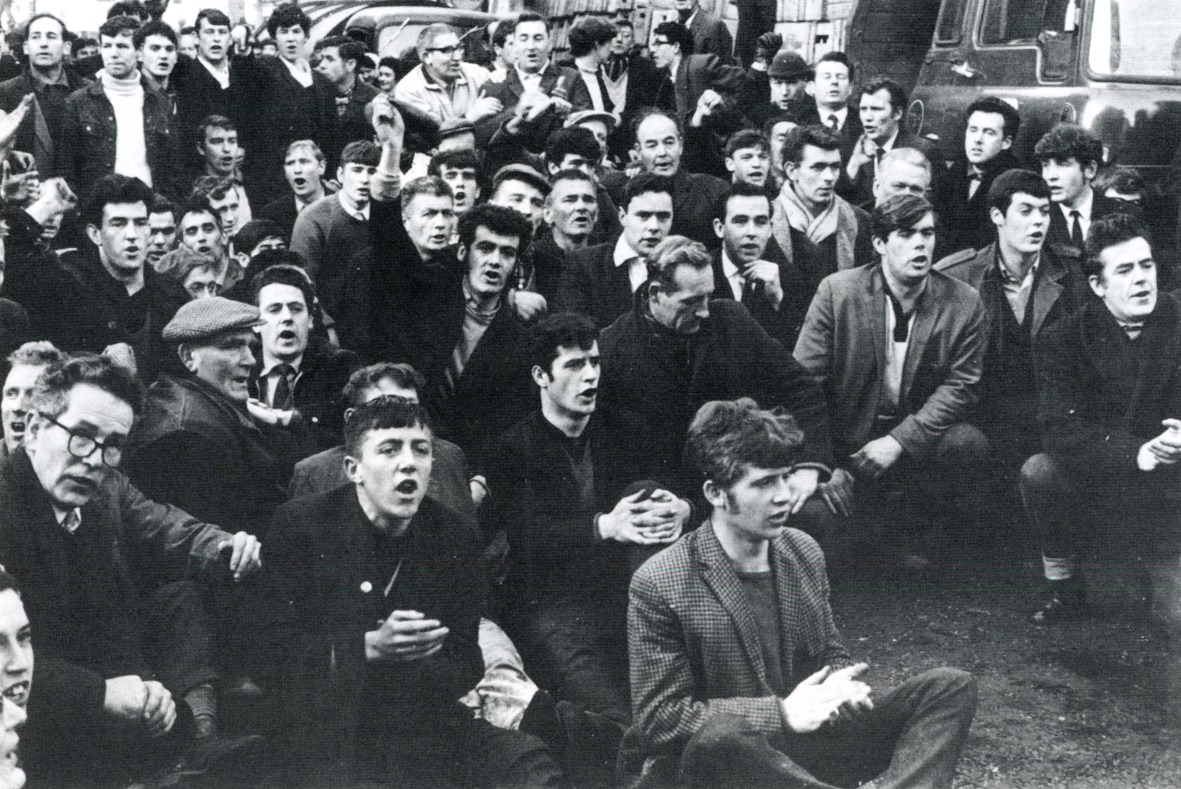
In the 1950s oppressed people around the world began to demand civil rights and change.
Political Tensions and Partition

By the beginning of the 20th century Catholic Derry was dominated by parliamentary Irish nationalism.


